
Imprint: The content of this blog entry is based on VR experiments in the context of projects carried out in the scope of the authors masters degree studies at FHNW University of Applied Sciences and Arts Northwestern Switzerland under the supervision of Prof. Dr. Doris Agotai.
Goal of the Project
The goal of the project “Exploration of dataspaces in Virtual Reality in the context of museological cultural heritage collections” is to enable the user to gain a better understanding and insight of a given data set (such as it’s contents, size, dimension, etc.) and identify correlations, dependencies and patterns among the data entries. This is achieved by providing intuitive forms of interaction with the data and offering spatial visual representation. We aim to give more context to the data and develop suitable forms for visualisation that will give reference to the geographical and chronological aspects of the data points. In addition, the use of VR technology will enable higher immersion and open up new perspectives on the data on display for the viewer and as a result increase user engagement. For this reason strong emphasis is placed on user experience and usability.
In this project we will be working with data from the online collection of Museum Rietberg Zurich, which is the only art museum for non-European cultures in Switzerland exhibiting an internationally renowned collection of art from Asia, Africa and Ancient America. Their extensive online collection comprises in addition to the objects in the art collection (including sculptures, paintings, ceramics, textiles) of the museum also numerous historical photographs out of estates and therefore offers an interesting data set as use case for this project. The key findings of this project though should be applicable to other archives or collections in the domain of cultural heritage and beyond.
Definition, Function and Purpose of Collections and Archives
As this project is concerned with data exploration in the context of museological cultural heritage collections, we first define what is considered with the term collection and secondly, what purpose and function collections fulfill.
According to Oxford Dictionary the origin of the word “collection” is defined as “a group of accumulated items of a particular kind” and goes back to the Latin “collectio(n-)” which is rooted in the verb “colligere” and means to “gather together” [1]. In our research we observed that the term collection is often used interchangeably with archive which is not surprisingly defined as “a collection of historical documents or records providing information about a place, institution, or group of people” [2]. Both terms are used to describe the activity of collecting and preserving artefacts. While the term archive gives a stronger reference to the modality how collection items are documented and the infrastructure (for example a database) that holds the information, the use of the word collection often indicates that there exists a kind of outlet that displays its contents, such as a museum or exhibition.
While museums, archives and libraries are all a sort of repositories, Dietz et al. distinguishes them by their motive. Museums are curator-driven and provide only limited access to their holdings, usually through a particular interpretative exhibition context provided by curatorial and educational staff. Archives tend to be research driven and are often only accessible by appointment. And libraries are user-driven and their role is to provide access to a vast amount of material, where the user can freely roam and make his/her own connections between works. [3]
Youngjin Lee writes in “Museum and Archive on the move” on the significance of archives that “archiving means systemizing and preserving documents of tangible and intangible information” and “provide these information repositories for further use. […] Archives coincide with museums and libraries in exhibiting and preserving or providing search facility services.” [4] With this statement he/she is highlighting the affordance of such dataspaces for search, research and exploration. And Okwui Enwezor, director of the “Haus der Kunst” in Munich, compares in the same publication archival systems with museological systems and collections by stating “while the archival system focuses primarily on the accumulation and preservation of documents, the museological system devotes itself to the collection and exhibition of artefacts, objects and artworks.” [5] He is making the same distinction as observed in the definition of the two terms above and putting emphasis on the presentation aspect of collections. He further cites Douglas Crimp who developed the connection of the museum to the function of the archive in his essay “The Postmodern Museum” and explains that “the semantic link between the two [museums and archives] is owing to their capacities to decisively nominate what is important and valuable. […] In order to properly understand the function of the archive and the museum […] we perhaps need to think about them on a meta-critical level, as sites for the accumulation and interpretation of signs and representation, rather than in their prosaic forms as containers of documents and artefacts.” [5] While validating that archives are a collection of large amounts of (semi-) structured data and acknowledging that there might be a bias how in the selection process of an archive or collection, he puts emphasis on the importance of interpretation of data and the insight that can be gained through the way it is represented.
Abhay Adhikari reinforces this line of thought: “Museums have a significant amount of reusable data about their collections, and this information can be combined with other sources to encourage discovery and learning. […] data can offer unique insights and in the process create new ways of working, as well as new forms of storytelling that allow cultural institutions to develop new models of participation with audiences online.” [6] He puts particular emphasis on the fact that real value is created when data is presented in a meaningful way and made accessible for exploration and discovery, allowing users to interact with it. Also discussing the approach how information is presented and the user experience that is created in this process, Annet Dekker finally raises the question in “Collecting and conserving net art: moving beyond conventional methods“ whether “documentation can potentially become an actual experience?” [7]. This leads to the follow-up question if creating that kind of experience should be considered as ultimate purpose of archives and collections. It can be summarized that the function and purpose of collections and archives goes far beyond just the accumulation of data. Their real value lies in the manner how this wealth of information is presented and how the user can explore and interact with the contents to gain insight and understanding.
Looking at Museum Rietberg, their goals declared in the collection policy are (1) collection, (2) preservation, (3) presentation, (4) documentation and (5) cooperation [8]. While the first two objectives, namely collection and preservation, lay a foundation, the online collection is one of the means to pursues the other three targets of the overarching goal which are presentation, documentation and cooperation.
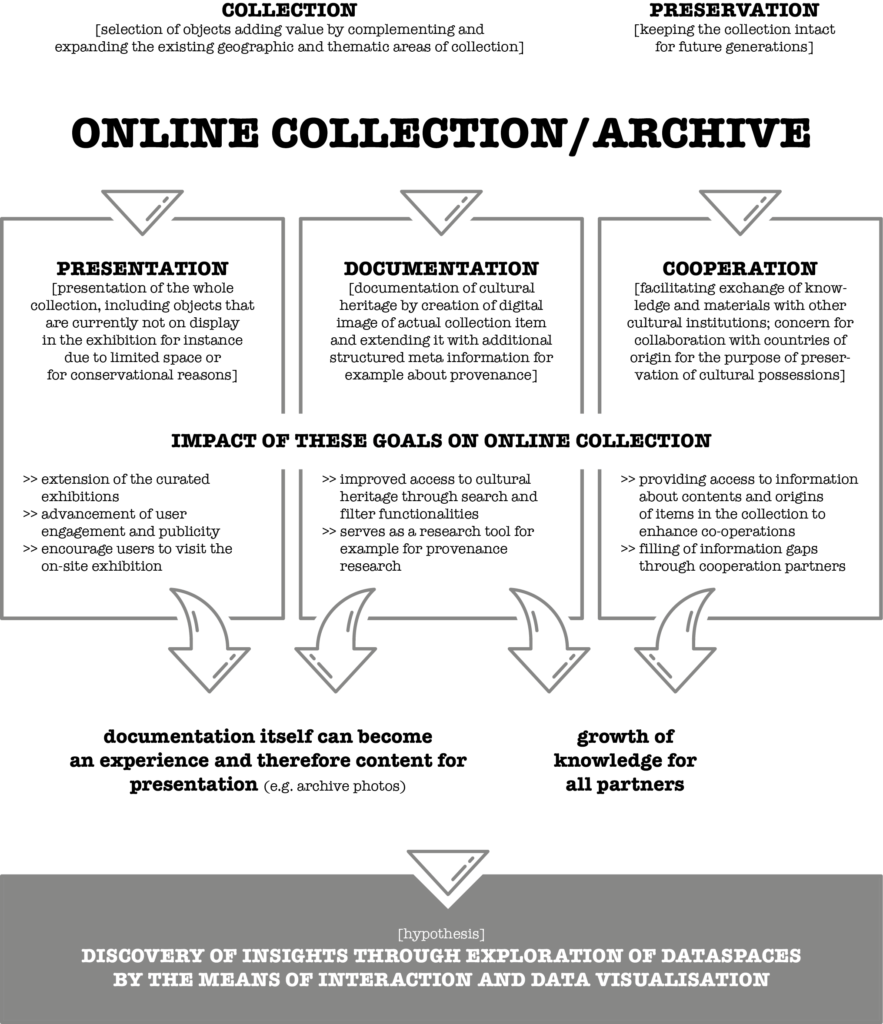
Figure 1: Purpose and impact of the online collection.
Exploring dataspaces through interaction with and visualisation of data
The main emphasis of the work in this project will be on facilitating the exploration of dataspaces in VR by the means of (1) interaction with the data set and (2) its visualisual representation. We are planning to investigate the following aspects for interaction and information visualisation of the whole data set as well as individual data points.
Interaction with data
- filter and search data (for example type/category, technique, purpose, origin, epoche, objects on display in current exhibition…)
- sort data by certain attributes or criterias (e.g. number of exhibition an object has been on display, most views in online collection, …)
- compare the behaviour of specific data points
- select, mark or manipulate an individual object
- switch between predefined views
Visualisation of data
- geographic reference
- chronological reference
- visualisation of occurrence (any or none), quantity or frequency (amount, size), dimensions of data set
- grouping/aggregation of similar objects, point out clusters, distribution and range
- display of other attributes or behaviours of an object, such as provenance or other meta information
Why using VR for the exploration of such dataspaces?
We are convinced that in contrast to traditional 2D representation of data by existing web applications and archival software an immersive VR application – allowing novel forms of spatial interaction with the data set and providing more context to the data through 3D visualisation – will open up new perspectives and lead to a better understanding of the data and eventually to the discovery of fresh insight.
[1] Oxford Dictionary: “Definition of collection in English”. URL: https://en.oxforddictionaries.com/definition/collection
[2] Oxford Dictionary: “Definition of archive in English”. URL: https://en.oxforddictionaries.com/definition/archive
[3] Steve Dietz, Howard Besser, Ann Borda, and Kati Geber with Pierre Lévy (2014): “Virtual Museum (of Canada): The Next Generation”. Canadian Heritage Information Network, Ottawa.
[4] Lee, Youngjin (2017): Chapter “Asia as a Methodology” in “Museum and Archive on the move: Changing cultural Institutions in the digital era”. De Gruyter, Berlin.
[5] Okwui, Enwezor (2017): Chapter “The death of the African Archive and the birth of the museum” in “Museum and Archive on the move: Changing cultural Institutions in the digital era”. De Gruyter, Berlin.
[6] Adhikarim, Abhay: “The arts and culture sector must think about data … but differently“. URL: https://www.theguardian.com/culture-professionals-network/culture-professionals-blog/2014/mar/28/arts-culture-sector-data-impact
[7] Dekker, Annet (2018): “Collecting and Conserving Net Art Moving beyond Conventional Methods, 1st Edition“. Routledge, London.
[8] Museum Rietberg: “Die Sammlungspolitik des Museums Rietberg”. URL: http://www.rietberg.ch/de-ch/sammlung/sammlungspolitik.aspx